The free sample era for AI headshots ended on June 9, 2026. Aragon AI, HeadshotPro, Secta AI and Photo AI all trimmed their no-cost previews that Tuesday, cutting a full gallery of roughly 40 images down to 3 watermarked frames. BetterPic made the same move 12 days earlier, on May 28. Anyone who wants a clean, downloadable headshot now pays for it. The cheapest single-use packs start at $27, up from $19 in early 2025. None of the four vendors announced the change with a blog post.
The cut lands hardest on people who need a headshot and have no budget for one. Job seekers, students, freelance designers and first-time real estate agents made up the core free-preview audience. Recruiters and HR teams also used free previews to mock up candidate pages before buying. A 2026 survey cited in our AI image pricing analysis found that 61 percent of free headshot generations came from users who never paid. That number explains the cuts better than any press release does.
Two forces drove the shift. The first is cost. Free previews are real GPU work, not a marketing mock. The second is abuse. Synthetic portraits became the easiest way to build a fake profile, and vendors now carry legal exposure when their output gets used for fraud. The EU AI Act transparency rules take effect on August 2, 2026, and California’s provenance law already pushes content credentials into generated images. Several companies added identity checks before those deadlines rather than after them.
What replaces the free gallery is a paywall of roughly $19 to $39. Some services now charge $19 just to remove the watermark from the 3 free frames. That is a worse deal than it sounds, because the vendor picks those three frames, not the user. The good news is that open-source face models improved enough in 2026 that a 100-image pack on a rented GPU costs less than a sandwich. Both paths are worth understanding before you spend anything.
| Service | Free preview before May 2026 | Free preview now | Lowest paid pack | Live selfie check |
|---|---|---|---|---|
| Aragon AI | 40 watermarked images | 3 watermarked images | $39 for 100 images | Yes, since June 9 |
| HeadshotPro | 6 watermarked images | 2 watermarked images | $34 for 60 images | Yes, since May 30 |
| Secta AI | 20 full-resolution images | 20 images at 720p | $19 for 40 images | No |
| Photo AI | 4 watermarked images | 1 watermarked image | $29 for 100 images | No |
| BetterPic | 8 watermarked images | None | $27 for 80 images | Yes, since May 28 |
| Canva Magic Media | 50 lifetime credits | 50 lifetime credits | $15 per month | No |
What exactly changed on June 9, 2026?
Aragon AI cut its free preview from 40 watermarked images to 3. The company also raised its lowest paid pack from $29 to $39 for 100 images and 8 background presets. HeadshotPro went from 6 free images to 2, and it removed the $12 credit that used to offset a first purchase. Secta AI kept 20 free images but dropped preview resolution to 720p and added a waiting queue during peak hours. Photo AI now gives away a single watermarked frame. BetterPic stopped offering previews entirely on May 28, 2026.
Turnaround times moved too. Aragon AI still delivers a paid pack in about 20 minutes. HeadshotPro widened its standard window from 30 minutes to 45 minutes for users who convert later. Secta AI added a 4-hour cap on queued previews during weekday afternoons. Refund windows narrowed across the board. Aragon AI cut its money-back period from 14 days to 7 days on June 9, and HeadshotPro made the same change on June 1.
Users noticed within hours. Threads on r/jobs and r/resumes filled up with screenshots of the new 3-image preview pages. The complaints were not really about paying. They were about paying before you can judge the output. A watermarked crop of 3 frames does not show ear shape, hairline accuracy, or how the model handles glasses. Vendors say the smaller preview is enough to judge quality. It is not. This is the same pattern we tracked in the end of the free sample phase across other AI categories.
Why a free headshot pack was never actually free
A 120-image headshot pack is heavier than it looks. The pipeline takes 20 to 30 minutes of face fine-tuning, then 8 to 14 minutes of sampling on a mid-range data center GPU. At list prices for an NVIDIA L40S instance, that is roughly $0.35 to $0.60 in raw compute per pack. Add storage, CDN delivery and payment processing and the number lands near $0.80. At 2 million free previews a month, a mid-sized vendor was burning between $700,000 and $1.6 million on images nobody paid for.
Conversion never covered it. Headshot services turn free users into paying customers at roughly 2 to 4 percent. Even at the top of that range, the math only works when the preview is cheap. Trimming a 40-image preview to 3 images cuts free compute by about 92 percent. That single change can flip a losing unit into a profitable one without touching the price of the paid pack. Google ran the same play on Gemini free tier image generation earlier in 2026.
There is a version of this story where vendors simply charge more. Most chose not to. The $29 to $39 band is sticky because buyers compare packs side by side, and a $49 headshot pack invites a photographer search. Squeezing the preview is quieter. It also keeps the advertised price on the landing page, which matters for paid search. The cost moved from the vendor’s margin to the buyer’s time.
The deepfake problem that forced identity checks
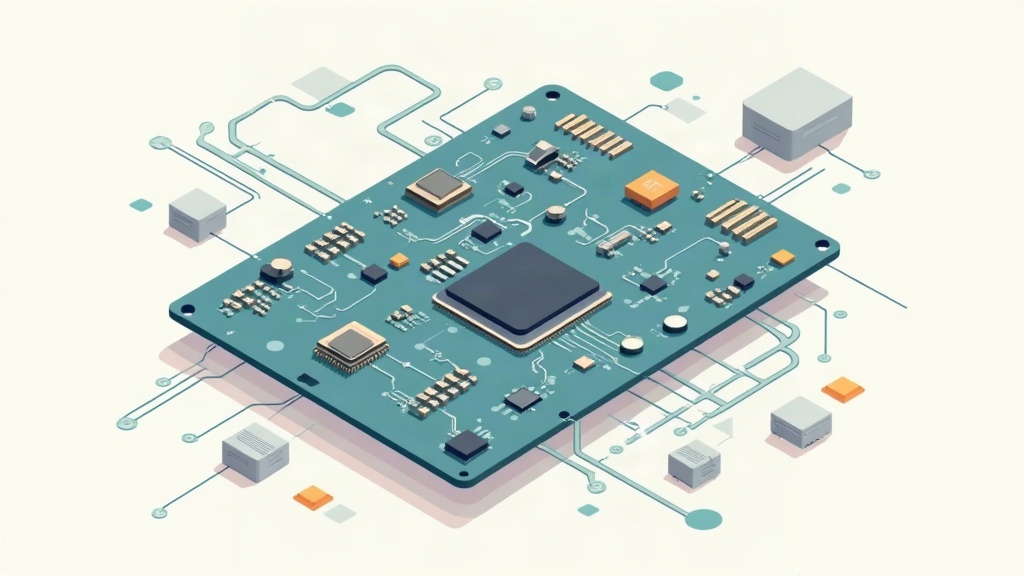
Vendors had a second reason to slow down free access. Synthetic portraits are fraud fuel. A convincing headshot costs nothing to generate and passes a casual video screening often enough to matter. Three of the six services compared here now require a live selfie check before generating anything, even a free preview. Aragon AI added it on June 9. HeadshotPro and BetterPic followed on May 30 and May 28 respectively.
The check is a 3-second video, not a photo. Users blink, turn their head, and read a random phrase aloud. It stops the simplest attacks, including uploading someone else’s profile picture. It does not stop a determined attacker with a webcam and a wig. Vendors know this. The purpose is to create a consent record that holds up in a dispute. If someone generates your likeness, the vendor can point to a verification log tied to a different face.
Regulation is catching up fast. EU AI Act transparency obligations land on August 2, 2026 and require deepfake output to be labeled as synthetic. California’s provenance law already pushes content credentials into generated files. That metadata is easy to strip, but paying customers rarely bother. For now, the biggest practical change is that free headshot generation is no longer anonymous. The broader squeeze on no-cost AI access is covered in our report on free tier limits getting tougher.
Free headshot options that survived the June cuts
Not every free route closed. Canva still hands every account 50 lifetime Magic Media credits, and that number did not change in June 2026. Google’s free tier still generates portrait images through Google AI, though the daily cap dropped from 100 to 20 images on the Gemini 3.5 Flash model. Microsoft Copilot’s free tier produces one portrait at a time with a visible watermark. None of these are headshot tools with background replacement and lighting presets. They are image generators you point at your face.
The gap matters more than the price. A headshot tool does three things a general generator does not: face fine-tuning on 8 to 12 source photos, consistent lighting across a full set, and background presets that match corporate expectations. Free general tools skip the fine-tuning step entirely. The result looks like you, but slightly off. Ears soften, glasses warp, and hair edges blur into the background. For a Slack avatar that is fine. For a job application it is a real risk.
If you only need one usable image, the free route still works in 2026. Take 10 selfies in daylight against a plain wall, run them through Gemini or Copilot, then crop tight. Expect 15 to 20 minutes and several bad generations before you get a keeper. Our free AI image generator comparison tracks which tools still carry a no-cost tier and which quietly dropped it.
The open-source route now costs less than a coffee
The strongest answer to the price hikes is a rented GPU. Open-weight face models shipped in 2026 handle identity preservation well enough for a professional profile photo. HiDream O1 Image Dev produces sharp 2048-pixel portraits and accepts face reference embeddings. Pair it with InstantID or IP-Adapter FaceID and you get the same three features the paid tools sell: your face, consistent lighting, and controllable backgrounds.
Cost is the punchline. A rented RTX 4090 runs about $0.44 per hour on consumer cloud platforms. A 120-image pack with a fine-tuning pass takes roughly 25 minutes end to end. That is under $0.20 in compute. Even at $1.79 per hour for a data center L40S, the same pack lands near $0.75. Compare that to $39 at Aragon AI and the margin on headshots stops looking like a technology business and starts looking like a convenience business.
The tradeoff is setup time. You need ComfyUI, a checkpoint download, and about 90 minutes the first time you build the pipeline. After that it is a two-click job. Hugging Face hosts the weights and the community workflows that make the face pipeline work, and the HiDream O1 Image open-source release is the most capable option in the free tier of this stack.
Who wins and who gets squeezed
Headshot vendors are not the only players. OpenAI and Google both bundle portrait generation into subscriptions that cost more per month than a single headshot pack. That pricing works in their favor. A user who already pays $20 a month for ChatGPT or Gemini has little reason to spend $39 on a one-time pack, even when the pack looks better. The standalone headshot business is now competing against bundles it cannot match on price.
Professional photographers are the quiet winners. The June changes pushed the $29 band closer to what a local photographer charges for a 30-minute session. When a headshot pack costs $39 and a photographer costs $150, the gap narrows enough that some buyers switch back. Vendors know it. Secta AI’s decision to hold its price at $19 looks like a deliberate play for the budget end while rivals move upmarket.
For users, the honest summary is short. Free AI headshots are gone as a product category. A preview of 3 watermarked frames is not a trial, it is a teaser. If you need one photo, use Gemini or Copilot and accept the quality. If you need a full set, either pay $19 to $39 or spend an evening with ComfyUI. The price war between Google and OpenAI may push general image generation toward free. It will not bring back free face fine-tuning.
Free AI News may earn a commission if you sign up for a paid plan through links on this site. This does not affect our reporting.
Frequently Asked Questions
Did AI headshot generators remove their free tiers in June 2026?
Most trimmed rather than removed. Aragon AI, HeadshotPro, Secta AI and Photo AI still offer a free preview of 1 to 3 watermarked images. BetterPic stopped free previews entirely on May 28, 2026, and it was the first of the group to do so.
How much does an AI headshot pack cost after the June 2026 changes?
Between $19 and $39 for a pack of 40 to 100 images. Aragon AI now charges $39, HeadshotPro charges $34, Photo AI charges $29, and Secta AI held its price at $19. Those are single-purchase prices, not subscriptions.
Why did free headshot previews shrink so much?
Three reasons stacked up at once. Raw GPU compute for a 120-image pack costs $0.35 to $0.60, free-to-paid conversion sits near 3 percent, and synthetic portraits became the easiest tool for building fake profiles. Trimming a 40-image preview to 3 images removes roughly 92 percent of that free compute.
Can I still get a free professional headshot in 2026?
Yes, with limits. Canva keeps 50 lifetime Magic Media credits per account, and the Gemini free tier still generates portrait images, though the cap dropped to 20 images per day on Gemini 3.5 Flash. Microsoft Copilot’s free tier adds a visible watermark. None of these do face fine-tuning.
Is it cheaper to generate headshots locally with open-source models?
For volume, yes, by a wide margin. A 120-image pack using HiDream O1 Image Dev with an InstantID face reference takes about 25 minutes on a rented RTX 4090, which works out to under $0.20 in compute. Budget roughly 90 minutes for the first-time setup.
Do AI headshot tools now require identity verification?
Three of the six services compared here do. Aragon AI added a live selfie video check on June 9, HeadshotPro on May 30, and BetterPic on May 28. The check is a 3-second clip with a blink and a head turn, used as a consent record rather than a hard security control.
What Should You Remember?
- Free previews dropped 92 percent. Four vendors cut free galleries from about 40 images to 3 watermarked frames on June 9, 2026.
- Pack prices now run $27 to $39. Aragon AI moved from $29 to $39 for 100 images, and HeadshotPro pulled its $12 first-purchase credit.
- Identity checks arrived at the top three services. Aragon AI, HeadshotPro and BetterPic now require a 3-second live selfie video before generating anything.
- Open source is the cheapest route. HiDream O1 Image Dev plus InstantID costs under $0.75 per 120-image pack on a rented data center GPU.
- Free general generators survive. Canva still gives 50 lifetime credits, and Gemini’s free tier caps portraits at 20 images per day.
- Refund windows narrowed. Aragon AI cut its money-back period from 14 days to 7 days on the same day the preview shrank.
- Photographers regained ground. A $39 pack against a $150 session is a much closer call than $19 against $150.
Free AI News is an independent editorial publication. Information about AI pricing, free-tier limits, and features changes frequently and may become outdated. Always verify current details through the vendor’s official pages. Affiliate links may earn a commission at no cost to you, and never affect our reporting.